





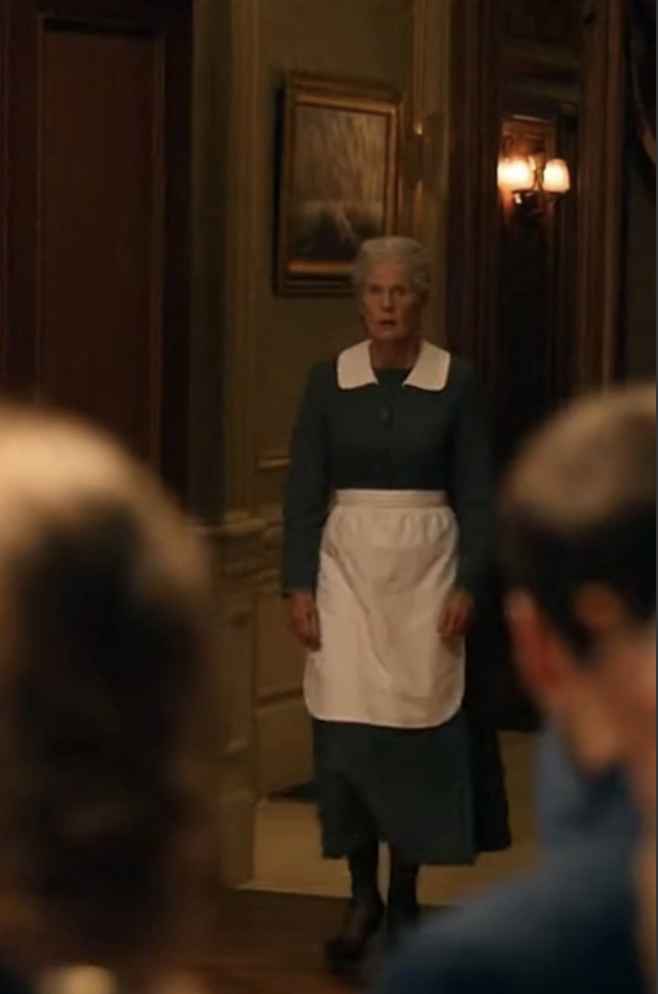
The old woman arrived on a Tuesday morning.
She was in her sixties, gray hair pulled into a simple bun, carrying a single worn suitcase.
“I’m here for the maid position,” she said quietly.
The family barely looked at her.
There were three siblings—two brothers and a sister—living together in their parents’ mansion with their spouses and children. The younger generation ranged from eighteen to thirty, all living off the fortune their late parents had left behind.
None of them worked. They just spent.
“You’ll start in the kitchen,” one of the brothers said dismissively. “We expect meals on time. No excuses.”
The old woman nodded. “Of course.”
From day one, they treated her terribly.
“Bring me my red sweater,” Cassie, the twenty-five-year-old, would call from her bedroom.
The old maid would climb the stairs, bring the sweater.
“Actually, I want the blue one.”
Back up the stairs.
“No, the red one was better.”
The old woman never complained.
Marcus, one of the sons, would drop food on the floor deliberately during meals. “Oops. Better clean that up before it stains.”
The old maid would get on her hands and knees and mop while they laughed.
“Move faster!” someone would shout. “We’re not paying you to take your time!”
At six AM, Cassie would bang on the maid’s door. “I need groceries. Here’s a list. Be back in an hour.”
The gardener got the same treatment. They mocked his accent, complained about every leaf out of place.
Only one person in the house showed any kindness.
Sadie was eighteen, the youngest. She’d help the maid carry heavy grocery bags. Say “please” and “thank you.”
The others mocked her for it.
“You’re too soft, Sadie,” Cassie sneered. “She’s the help. That’s what we pay her for.”
Then the letter arrived.
It was from their great-grandmother—their grandfather’s mother—who lived in another city. She was extremely wealthy, owned multiple properties, investments worth millions.
The family had barely heard from her in years.
The letter was simple:
“I am ill and aging. Before I distribute my estate, I wish to know my family better. Please write to me about your lives, your ambitions, and how you spend your days. I want to understand who you are.”
The family gathered in the living room, eyes wide with excitement.
“She’s loaded,” Marcus said, grinning. “This is our ticket.”
“We need to write perfect letters,” Cassie added. “Make ourselves sound amazing.”
They each drafted emails. Glowing descriptions of themselves. Charitable work they’d never done. Business ambitions they didn’t have. Kindness they’d never shown.
That evening, they sat around drinking wine, laughing.
“Can you imagine?” Cassie giggled. “Some old woman we’ve never met, and we’re supposed to pretend we care about her health?”
“Who cares if she’s sick?” Marcus raised his glass. “We just need her money.”
They started imitating her, pretending to be frail and coughing. “Oh, my dear grandchildren, tell me about yourselves before I die!”
Everyone laughed except Sadie.
“Stop it,” Sadie said quietly.
“What?” Cassie turned to her.
“She’s reaching out to us. Trying to connect. And you’re mocking her.” Sadie’s voice shook. “That’s cruel.”
“Oh, grow up, Sadie,” Marcus rolled his eyes. “It’s just a joke.”
“It’s not funny.”
Later, Sadie wrote her own letter. Honest. Thoughtful.
She explained that their parents’ company was struggling—losing investors, bleeding money. The board was running things, but barely. Sadie wanted to study business at a prestigious college so she could take over, save the company, honor her parents’ legacy.
She needed tuition money.
When the others found out, they laughed in her face.
“You? Run the company?” Cassie snorted. “You can’t even handle confrontation.”
“You’re too weak,” Marcus added. “You don’t deserve to be part of this family.”
Then they did something worse.
They wrote another letter to their great-grandmother.
“We feel obligated to inform you about Sadie. She is lazy, rude, and completely unambitious. She treats people poorly and has no respect for family. As a lesson for her shameful behavior, we believe she should not receive any inheritance.”
They sent it.
Sadie found out two days later when Cassie bragged about it at breakfast.
“We did you a favor,” Cassie said sweetly. “Maybe you’ll learn some humility.”
Sadie’s eyes filled with tears. She ran to her room.
The company was failing. College was her only chance. And they’d destroyed it.
A week later, another letter arrived.
“I will be visiting soon. I want to have dinner with all of you. I look forward to meeting you in person.”
Panic set in.
“The house has to be perfect!” Cassie shrieked.
They turned to the old maid.
“You need to prepare a feast,” Marcus barked. “Our great-grandmother is coming. Everything has to be flawless.”
The old woman nodded. “Of course.”
“And move faster!” Cassie added. “We don’t have time for you to shuffle around like usual!”
The maid worked for two days straight. Polishing silver. Preparing courses. Setting the grand dining table with the family’s finest china.
Finally, the evening arrived.
The family dressed in their best clothes. Hair perfect. Jewelry gleaming.
They gathered around the dining table, leaving the seat at the head empty—the place of honor for their great-grandmother.
“When does she arrive?” someone whispered.
“Any minute,” Marcus checked his watch.
They waited. Tense. Excited.
Then the old maid walked into the room.
She moved slowly to the head of the table.
And sat down.
“What are you doing?!” Cassie hissed. “That seat is for—”
“For me,” the old woman said calmly.
The room went silent.
“I am your great-grandmother.”
Everyone froze.
“That’s impossible,” Marcus stammered. “You’re the maid—”
“I wanted to see who you really were.” Her voice was steady, clear. “Not the lies you wrote in your letters. The truth.”
Cassie’s face drained of color.
“I’ve watched you for weeks,” the old woman continued. “I’ve seen how you treat people you think are beneath you. How you mock those who serve you. How you waste your parents’ legacy.”
Marcus opened his mouth. Nothing came out.
“I read every letter you sent. The false charity. The fake ambition.” She looked at each of them. “And then I read what you wrote about Sadie.”
Sadie’s eyes widened.
“You called her lazy. Rude. Unambitious.” The old woman’s gaze softened as she turned to Sadie. “But she was the only one who showed me kindness. The only one who told the truth. The only one with real ambition.”
“Grandmother, please—” Cassie started.
“I’ve made my decision.” The old woman stood. “None of you will receive a single dollar from my estate.”
Gasps around the table.
“Except Sadie.”
Sadie’s hands trembled.
“You will inherit everything. My properties. My investments. My accounts.” The old woman smiled. “And I will personally fund your education. You’ll attend the best business school in the country.”
“No!” Marcus slammed the table. “You can’t—”
“I can. And I have.” She looked at him coldly. “My lawyers have already drafted the documents.”
Cassie burst into tears. “We’re family!”
“Family treats each other with respect,” the old woman said. “Something none of you understand.”
She extended her hand to Sadie. “Come, dear. Pack your things. We’re leaving tonight.”
Sadie stood, tears streaming down her face. “Thank you.”
They walked out together, leaving the family screaming behind them.
Three years later, Sadie graduated top of her class.
She took over her parents’ company, turned it around, made it profitable again.
Her great-grandmother lived to see it, proud and healthy for five more years.
When she finally passed, Sadie inherited everything—and used it to build something meaningful.
The rest of the family?
The company they’d bled dry collapsed completely. Their parents’ fortune ran out. They had to sell the mansion.
Marcus got a job in sales. Hated it.
Cassie moved in with a friend, working retail.
They’d treated people like servants.
And in the end, they got exactly what they deserved.
Nothing.