
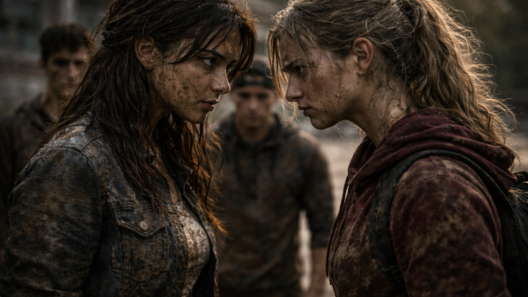




Everyone feared the land of Darts.
Not because of armies or walls. Because of what lived there — in the soil, beneath the flat stones, coiled in the shadows of every doorway. Snakes. Thousands of them, of every species, in a density that made merchants find longer routes and soldiers refuse orders. A surveyor from Varen had once described crossing the borderlands as moving through a living carpet that has decided to become curious about you. He had not returned.
But the people of Darts returned every day.
They had stopped fearing the land generations ago and started learning it instead — understanding that fear was one transaction and respect was another, and that snakes, like all living things, respond to what you bring to them. Their children grew up barefoot, knowing which species nested where, reading the language of scale and stillness. They became extraordinary farmers. The soil of Darts, shaped by its unique ecology, grew crops of richness no neighboring land could match. Their granaries were full. Their people were healthy.
They asked nothing from their neighbors.
Their neighbors noticed.
Commander Barton of the Varen Territories had taken eleven regions in fourteen years. He was not cruel in the way men who enjoy cruelty are cruel. He was something more efficient — a man who had decided the world was resources and obstacles and that his function was converting one into the other. Darts was a resource. The soil alone was worth the campaign. He assembled four thousand soldiers for a farming community with no standing army and no record of military conflict in three generations. His officers suggested two thousand. He brought four because he wanted it finished before noon.
The army crossed the border at dawn.
They expected resistance. Scouts, signal fires, the basic architecture of a people who knew they were coming. There was nothing — only the quiet of a land that was not empty but was watching. Snakes moved through the long grass at the edges of their formations, through branches overhead, in slow amber rivers across the road. None struck. None fled. They simply watched with the patient indifference of things that have lived somewhere long enough to stop hurrying.
The village appeared at mid-morning. Stone buildings, well-constructed. A granary impressive by any standard. Terraced fields running to the river in neat rows. Evidence of people who had been building carefully for a very long time.
Empty. Every building, every street, every market stall — goods still laid out as though the vendors had simply stepped away.
Barton rode through the central square and felt the unease of a man who prepared for one situation and arrived at a different one entirely.
Then someone at the front shouted.
She was standing at the far end of the road. Alone. A young woman, dark-haired, barefoot, in the simple clothing of the region. A sword at her hip that seemed almost incidental. Her arms loose at her sides. Looking at four thousand soldiers the way you look at weather — noting it, assessing it, deciding how it affects your day.
The laughter spread through the column like fire through dry grass.
This is who they sent. A girl. They sent a girl.
Barton didn’t laugh. He looked at her and thought: what does she know that I don’t.
That thought arrived a moment too late.
Her name was Melinda.
In Darts, that name meant something that didn’t translate — the closest was she whom the land chose, though even that was insufficient. Her transformation had not been sudden. It had been years of accumulated contact, sustained intimacy, the kind of long relationship that rewrites the body from the inside. The venom had been part of it — small amounts, again and again, her body learning and adapting until it incorporated what would kill anyone else. Her eyes in ordinary light appeared dark, almost black. In moments of intensity they illuminated from within — a cold blue light that moved in them like bioluminescence from the deepest water. Not a reflection. A generation.
She was connected to the snakes of Darts the way the land itself was connected to them. Not through anything that could be easily named. Through years of shared presence. Through being known, and knowing in return.
She had not summoned them that morning.
They had come because she was there.
The first wave came in a line — twenty soldiers, certain of the outcome.
She moved through them before they resolved what was happening. Not fast, exactly. Precise in a way that made speed irrelevant, her body finding the geometry of every attack before it arrived. She emerged from the other side of the line and was still again before the last man had finished falling.
The second wave came larger, spreading wide.
She let them come.
Then her eyes changed.
The blue deepened and expanded — not a glow but a radiance, a cold steady pulse that hit the advancing soldiers like a change in air pressure. The front rank stopped mid-stride. Then the next rank. Then the next — a wave moving backward through the column, men’s weapons lowering, their eyes going distant and interior, sitting down gently in the road with the calm expression of people in deep sleep still looking for somewhere to lie down.
Hundreds of them. Sitting peacefully in the morning sunlight.
Those at the column’s edges fought it — officers blinking hard, shouting orders no one could hear. Barton himself gripped his saddle and pushed back with everything he had, sweating with the effort.
He stayed conscious.
He would have been better off if he hadn’t.
Melinda drew her sword.
She looked at Barton across sixty yards of morning air. Then she threw it — not a soldier’s throw, not flat and tactical. She threw it the way you release something back to its nature. Upward and forward, the blade turning once in the light, and then the light caught it and something moved in the metal that was not light — a shimmer, a flexion, a lengthening — and the sword was no longer a sword.
Black. Enormous. Moving through the air with the muscular certainty of a thing that had always known how to move through air, its coils finding themselves mid-flight, its eyes the same cold blue, locked on the man at the center of the column.
Barton saw it coming.
He had no time to do anything about it.
It hit his shoulders and coiled — once, twice — and Barton made one sound that was not a word and then the morning went quiet.
The remaining soldiers looked at their commander. At the snake. At the young woman standing barefoot on the road at the far end of the village.
Then they looked at the grass around their feet.
At the branches overhead.
At the walls on either side.
And understood, for the first time, where they actually were.
The retreat began quietly and became less quiet quickly and within the hour the road back to Varen held nothing but the memory of four thousand men who had decided this particular campaign did not add up.
The people of Darts came back to the village by midday.
Melinda was sitting on the granary steps when they returned. A small corn snake moved slowly through her fingers, going nowhere in particular. She watched it with the attention she gave everything — complete, unhurried, without any need to own what passed through her hands.
An elder sat beside her.
“Will they come back?” he asked.
“Others will come,” she said. “They always come to land they think is easy.”
He looked at the empty road.
“And?”
She watched the corn snake find its way out of her fingers and down to the warm stone of the step.
“The land will answer them,” she said. “As it always has.”
The snake reached the grass and disappeared into it without looking back.
The village filled with voices and the smell of cooking fires and the ordinary sounds of people returning to their lives. The snakes moved through the wheel ruts in the road as they always had. The fields waited by the river, unhurried and full.
The land of Darts had never needed saving.
It had only ever needed to be itself.